Use a flexible tape and an unpadded bra that does not compress your bust. Stand naturally, with your shoulders relaxed.
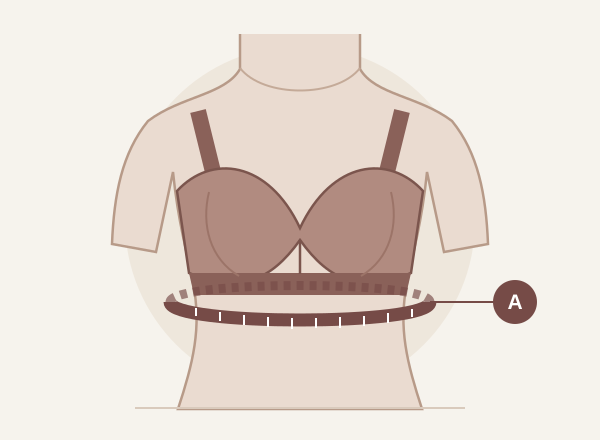
AUnderbust
Wrap the tape just beneath your breasts, around the ribcage. Keep it level at the back and comfortably firm. Breathe normally and record the reading after an ordinary breath out.
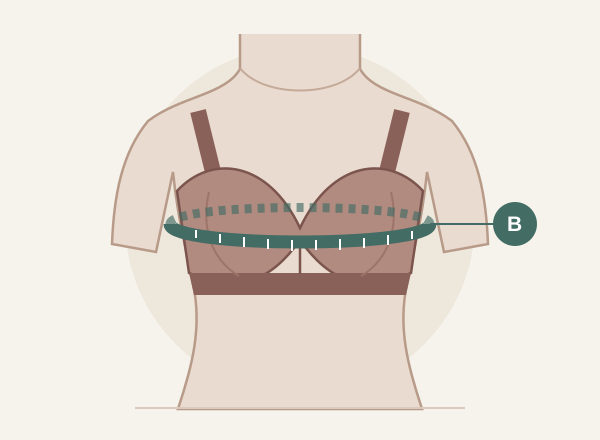
BFull bust
Move the tape to the fullest part of your bust. Let it rest against your body without pulling tight. Check in a mirror that the tape stays level, then note the measurement.
Keep the actual readings. Repeat once to check them. Use the chosen style’s chart to interpret your measurements; adding inches or using one universal cup formula can give a different result.
Keep the useful numbers
Your measurement notes
Enter your two measurements to see centimetres and inches together. Add a style code when asking us for help.
This converts units, not bra sizes. A size recommendation needs the specific style’s fit information.
Your measurement summary will appear here.
Your notes stay on this page unless you choose to copy or share them.
02
The band and cup work together
The number describes a band size; the letter describes the cup within that band. A cup letter on its own does not tell you the size of the bra.
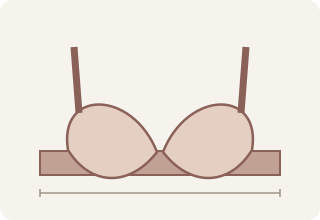
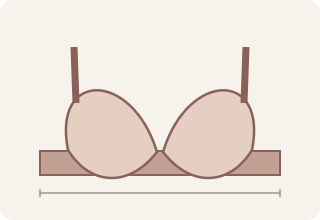
75BLess cup space75CMore than 75B75DMore than 75C
Same band label, different cup sizes. These drawings explain a relationship within one sizing system; they are not measured shapes or a comparison of bodies.
What are “sister sizes”?
Changing the band while moving the cup letter in the opposite direction can preserve a similar cup capacity. For example, the EU-label family below appears in Triumph’s size guide:
70DSmaller band One cup step up
↔
75CReference size
↔
80BLarger band One cup step down
The fit around your body still changes. Use sister sizes to discuss a fit adjustment, not to assume that three sizes are interchangeable.
03
Which bra shape suits your outfit?
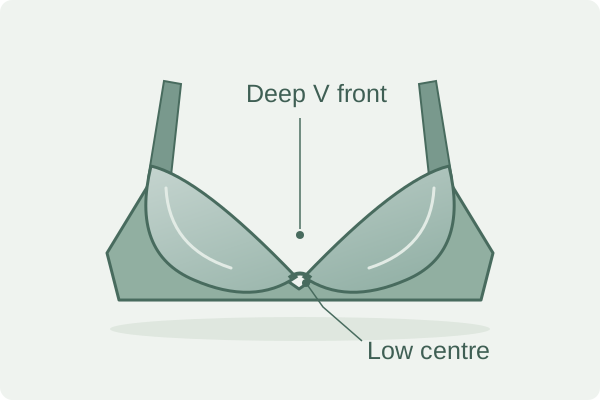
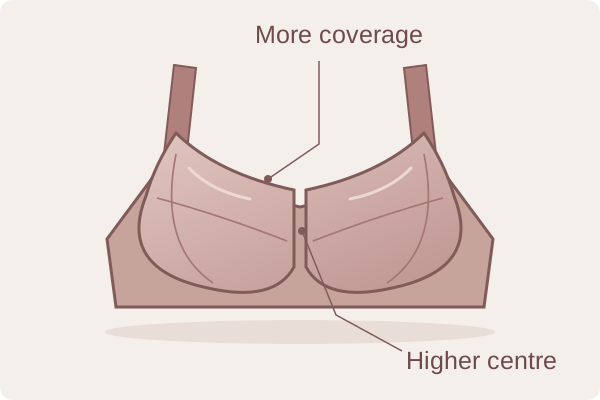
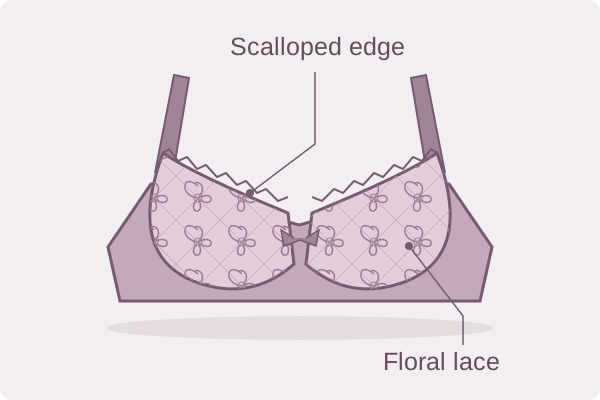
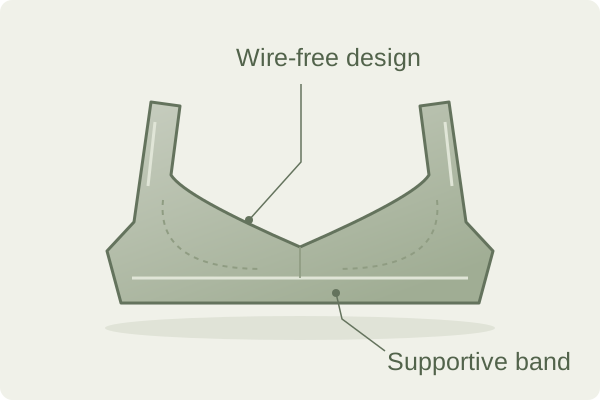
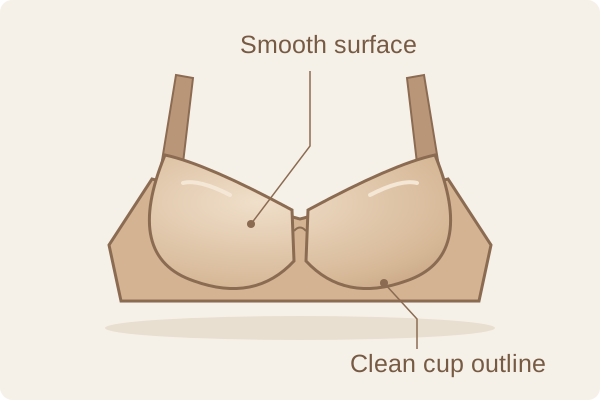
Start with the neckline you want, then check the fit. These six drawings help you recognise the details; a drawing cannot tell you which cup size to buy.
SizeHow much room?
Band + cup, or the product’s letter-size chart.
ShapeWhere is the coverage?
Compare the neckline, centre and cup edges.
Fabric & constructionHow is it made?
Lace, smooth fabric and underwire are separate choices.
01
Neckline & straps
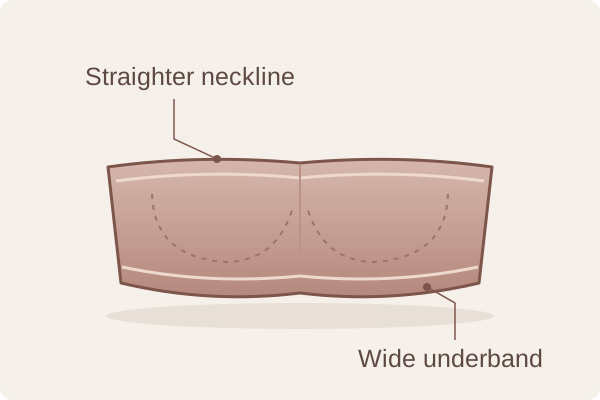
Bandeau & strapless
A straighter neckline; a true strapless design leaves the shoulders clear.
Wear with
Off-shoulder or strapless outfits.
Before choosing
Check that the chosen bra is designed for strapless wear. A bandeau neckline alone does not confirm this.
Original shape illustrations, not product photos or size diagrams. One bra can be full-coverage, wireless and lace at the same time. Check the individual product’s photos and specifications for its exact construction.
Same size label, different fit?
A plunge and a full-cup bra can carry the same size label yet sit differently. Compare the shape as well as the size; do not automatically go up or down a cup because you change styles.
This is a real option on style D92738. “M” and the bracketed range belong to this specific style. They do not mean that every M fits the same range, or that all wearers within it get the same fit.
Letter sizes need their own product information. For instance, W92791 lists M through 4XL. When measurements are not listed, send us the style code and your readings so we can check.
The letter sequence can change between countries and brands. For example, Wacoal’s chart pairs a UK E with a US DDD. That is a reference for that chart, not a rule to apply to every product.
When comparing sizes, send us the complete size, brand and country system of a bra that fits you, plus your measurements and the LXSC style code.
Soft cups, padding, stretch and the shape of the pattern also affect how a bra fits.
Move your arms, sit down and take a normal breath. The size label is a starting point; the way the bra feels and sits matters too.
Band
Look for: a band that stays level around your body and feels secure.
Recheck if: it rides up at the back or feels painfully tight.
Cups
Look for: cups that contain the bust comfortably, with an edge that sits smoothly.
Recheck if: there is persistent spilling, folding or gaping. The cup size or the shape of the style may need adjusting.
Straps
Look for: straps that stay in place without digging into your shoulders.
Recheck if: tightening them is the only way to get support, or they keep slipping after adjustment.
Underwire, if present
Look for: a wire that follows around the breast, resting on the ribcage.
Recheck if: it sits on breast tissue, pinches or pokes. A different cup size or wire shape may suit you better.
Something does not feel right?
Check the band first. Settle it level around your ribcage, then adjust the straps without pulling the band upwards.
Look at the cups and shape together. Spilling, gaps or pressure can mean a size or shape mismatch. A lower neckline alone will not solve a fit problem.
Ask us about the exact style. Share your two measurements, product code and what feels wrong. We can check the available product details before you decide.
Can a bra extender help if only the band feels snug?
If the cups already sit smoothly and the band needs a little more length, a compatible extender adds room at the back fastening. Spilling, gaping or wire pressure calls for a fresh size and shape check.
Count the hooks, measure the distance between their centers and check the fastening width before choosing. Compare the four-row and five-row options on W92762. If the measurements are unclear, send the team a photo with a ruler beside your fastening.
Does a 75 band mean my underbust must be exactly 75 cm?+
No. A band number is a size label. A brand may assign it to a range of body measurements, and the garment stretches when worn. Use the selected style’s chart rather than treating the printed number as an exact tape measurement.
Is a D cup always the same size?+
No. Cup capacity changes with the band size. In the same sizing system, 75D and 85D do not have the same cup volume. Cup letters also differ across international systems, particularly beyond D.
Can I choose the same M or L in every style?+
Not reliably. Letter sizes are specific to the product. Check its available options and any accompanying measurements. A combined label such as M (75BCDE) is a style-specific size description, not a conversion rule for all bras.
No. Coverage describes how much of the bust the cup covers; cup size describes capacity in relation to the band. A plunge and a full-coverage bra can have the same size label and different necklines. Compare both the shape and the product’s size information.
Do not automatically size down. Start with that product’s fit information and check that the band stays secure without discomfort. The cups should contain the bust without spilling. Also confirm that the design supports strapless wear; a straight bandeau neckline alone does not mean its straps can be removed.
Lace describes fabric or decorative trim. It can be used on different cup shapes, with or without underwire. Look at the neckline, lining, construction and size options separately when choosing a lace bra.
What should I measure for panties or a lingerie set?+
Record your waist and the fullest part of your hips, keeping the tape level. Compare those measurements with the bottom’s own size information. A bra size alone does not determine a panty size; ask us to check both pieces of a set.