
How to Measure Your Bra Size at Home
Measure your underbust and the fullest part of your bust, then compare those measurements with the individual style's size information. A size label is a starting point, not a guarantee of fit.
A closer look at what you wear closest. Explore bra sizing, everyday fit solutions, fabric details, lingerie styling and the ideas shaping new collections.
Start with what you want to solve
A cup letter is only part of a size. Lace is only part of a fabric story. And the right bra for a low neckline may be different from the one you reach for under a T-shirt. Use the topics below to compare the details that matter to you.
Find your starting point01 / Size & fit
Start with two measurements, then use the size information for the exact style you want. A bra size chart helps you compare labels; it cannot guarantee how every design will fit.
Keep a soft tape level around the ribcage below the bust, then measure around the fullest part of the bust. Write down both readings and whether you used centimeters or inches. The two measurements are more useful together than a bust measurement on its own.
See the measuring positionsIn a band-and-cup label such as 75B, the number and letter work together. For M, L or combined labels, use the range stated for that product. US, UK and other size systems do not always share the same cup sequence; changing a label is not the same as converting a measurement.
Understand size labelsA nearby sister size can offer a similar cup volume with a different band. It is not an identical fit. Compare the complete label in the same sizing system, then check the actual band and cups rather than moving a cup letter in isolation.
Explore band and cup relationshipsCheck what a size table measures. A body-size range describes the wearer, while a garment dimension describes the item, sometimes laid flat or stretched. An elastic bra band need not have the same relaxed length as your underbust circumference. Ask which measurement is shown if the listing does not make it clear.
Check a style’s size informationContinue with our published guides
Measure your underbust and the fullest part of your bust, then compare those measurements with the individual style's size information. A size label is a starting point, not a guarantee of fit.
Band labels can be compared approximately, but Asian, European, US and UK cup systems are not universally interchangeable. Always check the specific style's measurements and fit information.
02 / Fit solutions
Look at the whole bra before changing one size. The same symptom can involve a different band, cup shape or adjustment.
Check whether the back band stays level when you lift your arms. If it moves upward, reassess the band fit and strap adjustment. Compare the complete band-and-cup size before trying another size; simply tightening the straps can hide the problem.
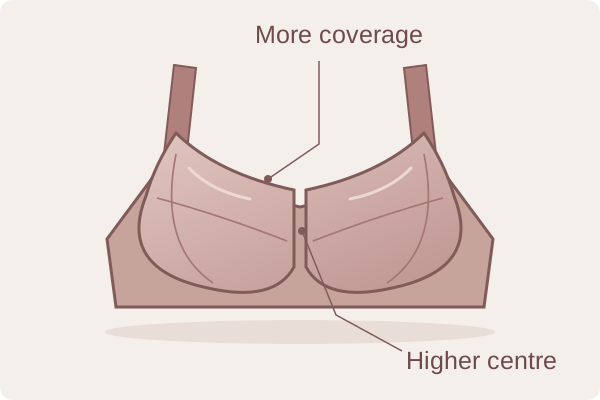
Settle the bust into the cups, then check the band, straps and cup edges. Space at the top can involve the cup size or the shape of that design. A fuller-coverage molded cup and a lower-cut cup can fit differently even with the same label.
Check whether the cup contains the bust at the neckline and sides. Compare another cup size or a different coverage shape while keeping the band fit in mind. A bra should not need constant repositioning to keep the bust inside the cups.
Adjust straps if the style allows it, and check their position on your shoulders. Recheck the band as well. When the wire, cup edge or strap presses uncomfortably, reconsider the fit or design instead of accepting discomfort as normal.
Check the band fit and whether the cups fully contain the bust. Cup volume, the center shape and band fit can all matter. Do not force the center against the chest by overtightening the straps. Wireless designs can sit differently at the center.
Check the complete fitCheck the cup against the fuller side so it is not compressed. Adjustable straps and flexible cup edges may help you compare fit on the other side. Check the actual construction: not every lace fabric stretches.
Read Bravissimo’s fitting guidance Compare lace constructionFor style-specific help, send the LXSC code, your usual size and brand, and your bust and underbust measurements. Our team can check the product information with you.
03 / Bra construction
These labels can describe the same bra because they refer to different features. Choose the structure, the cup coverage and the surface finish separately.
Wireless means there is no underwire beneath the cups. Underwire describes a wire along the lower cup edge; a soft or flexible wire is still a wire. Compare the band, cup shape and strap construction alongside your fit preferences. Neither label alone guarantees comfort.
Compare wire-free optionsA seamless or smooth finish describes the surface or edges. Padding describes the layers inside the cup. A bra may combine a smooth finish with thin padding, and it may be wired or wireless. Read those fields separately when comparing products.
Explore smooth finishesFull coverage describes how much of the bust the cup covers. It is not a band size, a cup letter or a guarantee of a particular fit. For example, LXSC D92738 lists wireless construction, thin molded cups and a full-cup shape: three different features to compare with its size range.
Explore fuller coverageA minimizer, also spelled minimiser, describes a design intended to make the bust look less projected under clothing. Full coverage describes how much the cup covers. One does not establish the other, and neither changes actual breast size. Compare the selected style rather than sizing down for this effect.
Read Wacoal’s explanation of minimizer design Compare coverage and fitA front closure opens at the center front; a back closure fastens behind you. Check whether the chosen style uses hooks, a clasp or a zip, and whether the band has adjustment positions. A front fastening does not establish cup size, wire construction or a nursing opening.
Compare front-fastening stylesContinue with our published guides
Wireless bras have no underwire; underwire bras have a curved wire beneath each cup. Compare the band, cup shape, coverage and your own fit preferences rather than assuming one type is always more comfortable.
04 / Dress for your day
Let the neckline, back and fabric of the outfit guide your comparison. Try the whole combination rather than choosing by the bra name alone.
For the least contrast, start with a shade close to the skin on your chest. A white bra can look like a lighter patch under a fine white shirt. With a heavier cotton shirt, the first thing you notice may be the ridge at the top of the cup.
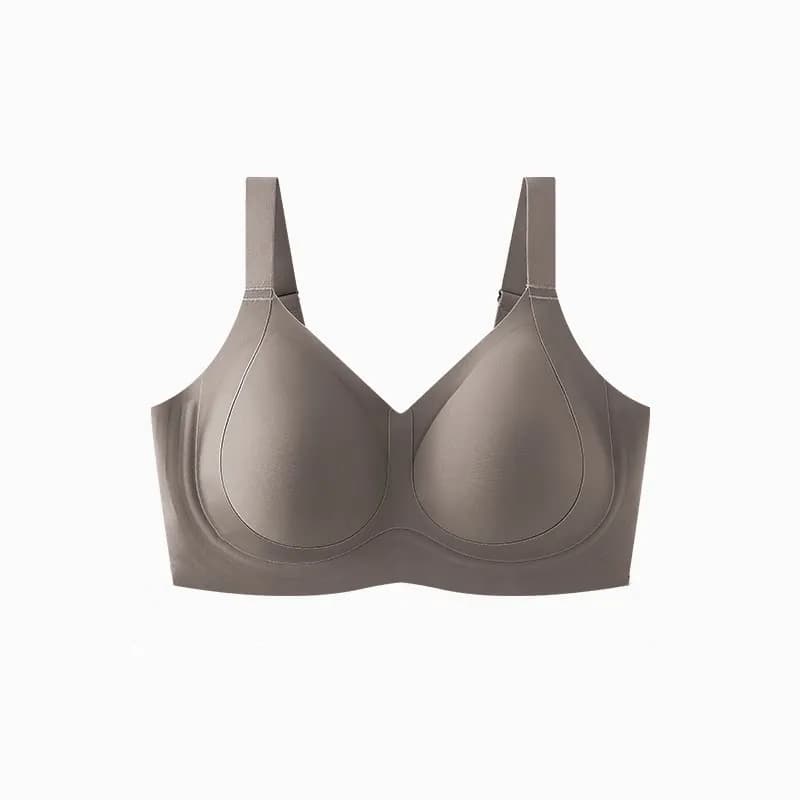
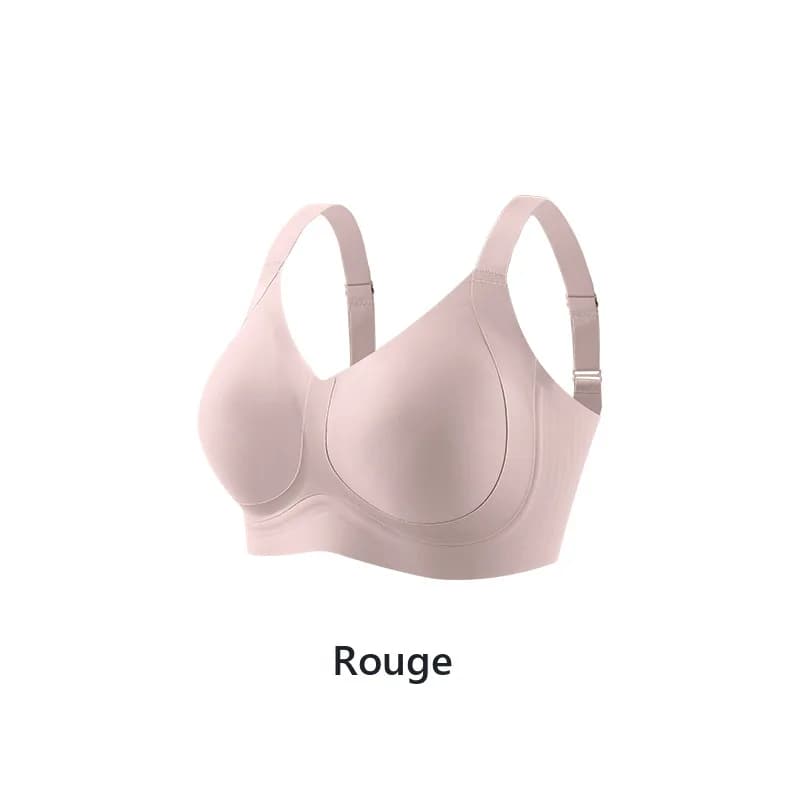
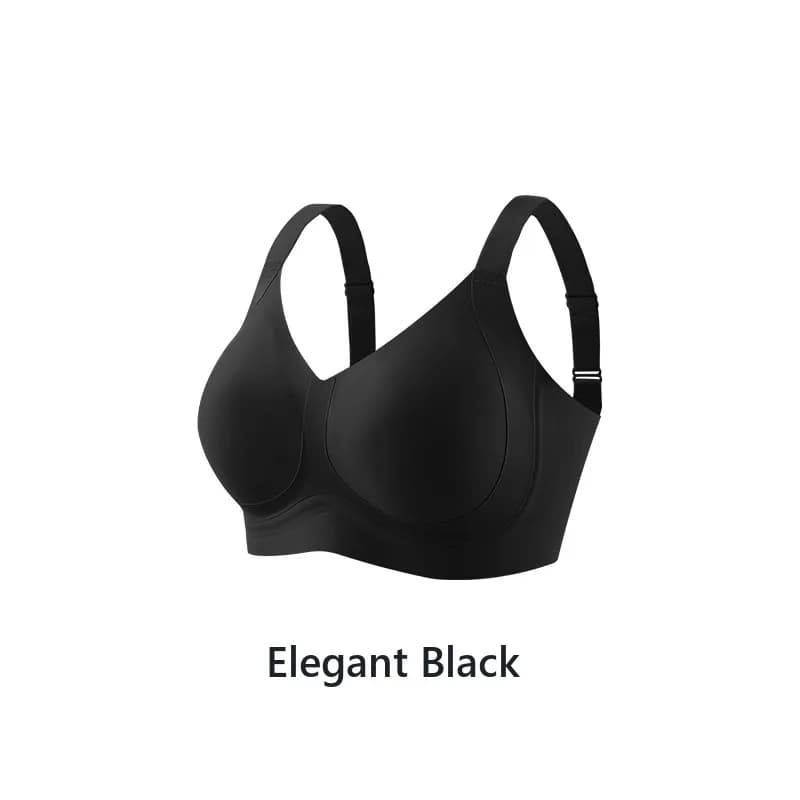
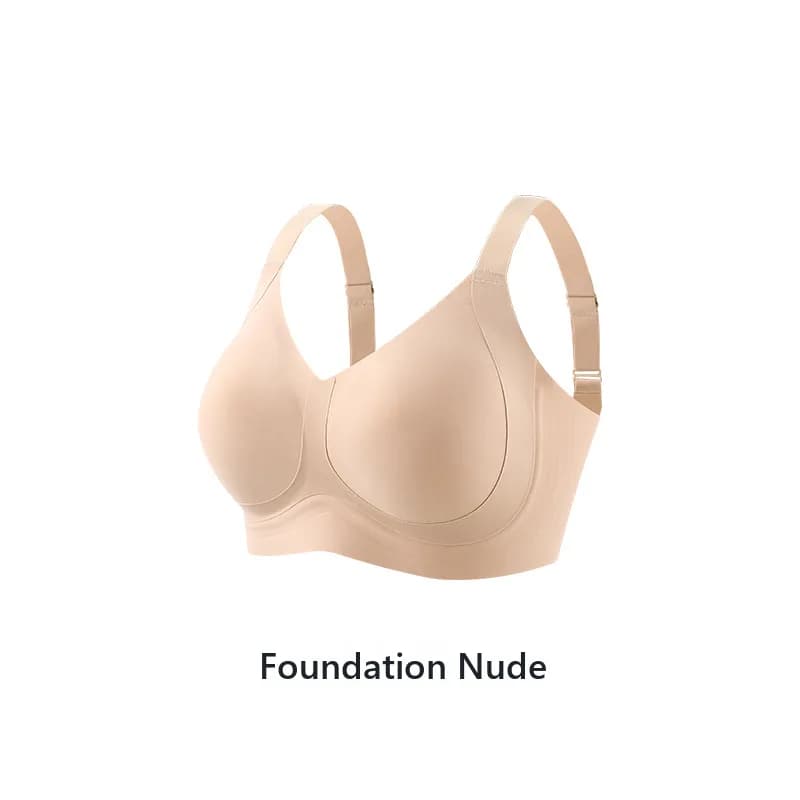
D92738 has thin molded full cups and comes in the four shades shown. If pale beige stands out against your skin, try Coffee. If beige looks yellow on you, compare the pinker Rouge. “Invisible Nude” is the name of the pale shade. Black is an option when you want the bra to show through.
Try it with your shirt. Button it and face a window, then turn sideways. If you can see the whole cup as a patch of color, try another shade. If you see a raised line only along the cup edge, check whether the edge lifts or digs in. Changing color alone will leave that outline.
See D92738 colors and sizes →A low U-back bra can work when the dress covers the band at the base of the U and has enough fabric over each shoulder to cover the straps. Check the sides too. A wide scoop can reveal a side panel even when the fastening stays hidden.
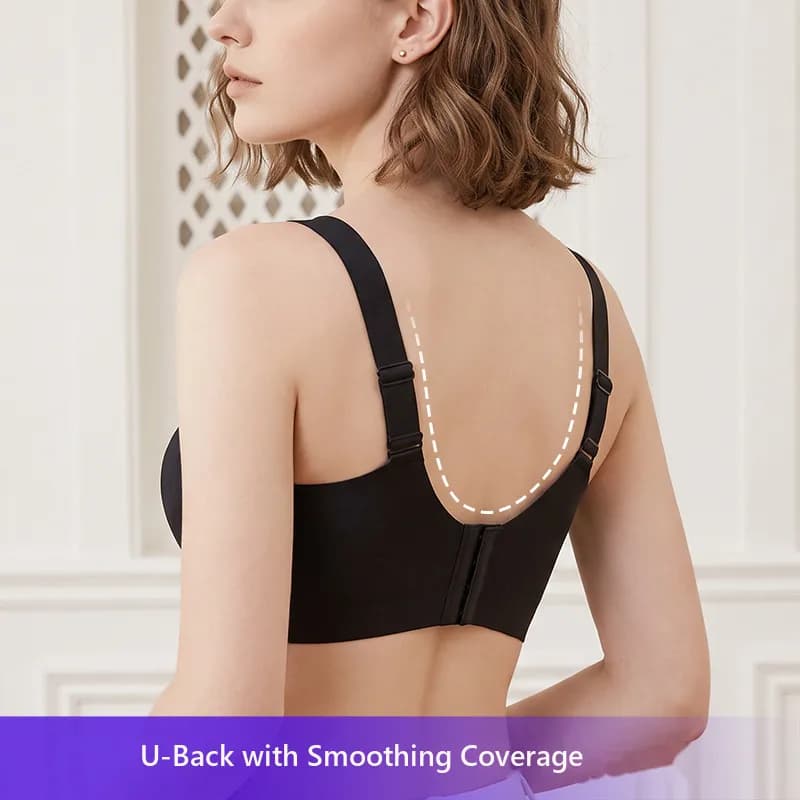
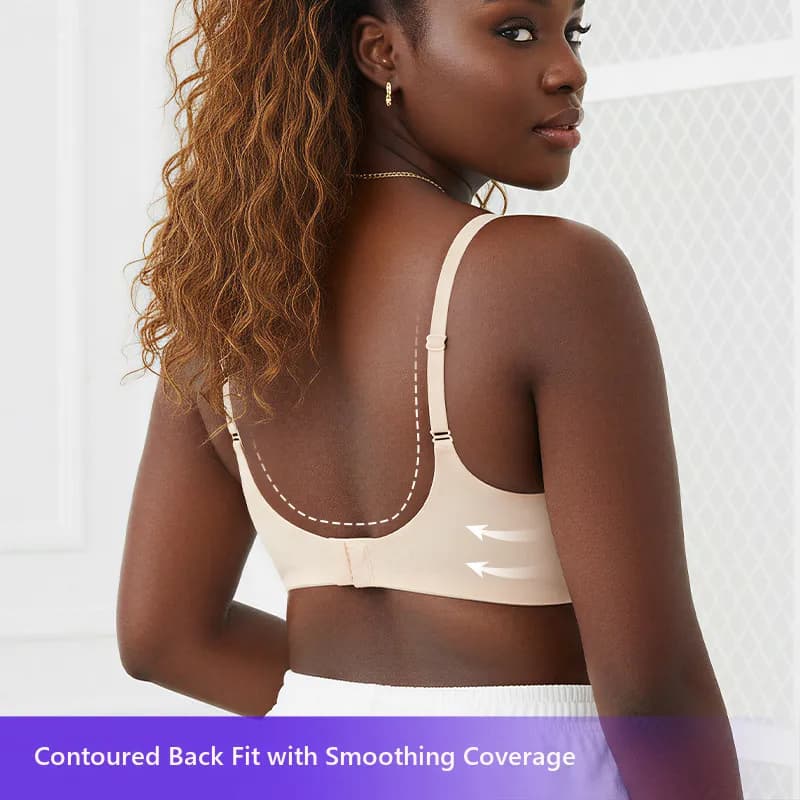
Check it in motion. Put on the dress over the fastened bra. Turn, reach forward and sit down while checking the back in a second mirror. If the opening dips below the band, both designs will leave the band visible. For a strapless dress, choose a style designed for strapless wear.
Compare smooth cup surfaces, edges and seams. Check the result under the actual top: thickness, color contrast and fit all affect what shows through. A seamless label is a starting point, not a promise of invisibility.
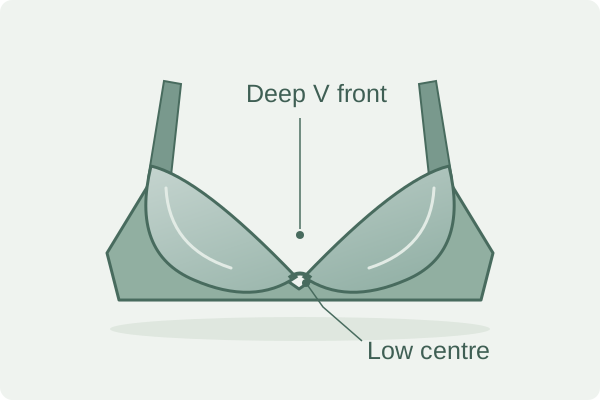
Compare seamless brasA plunge design has a lower center than a fuller-coverage shape. Compare the actual neckline and center height with your outfit. A plunging shape does not, by itself, mean padding or a push-up construction.
See bra shape illustrationsCheck that the bra is designed to be worn without straps and stays in place when you move. A bandeau describes a shape; detachable straps describe a feature. Neither alone confirms that every style will work strapless.
Check strapless and bandeau options05 / Fabric & cups
Look beyond the front photograph. Fabric, lining, cup layers and fastening details help explain how one design differs from another.
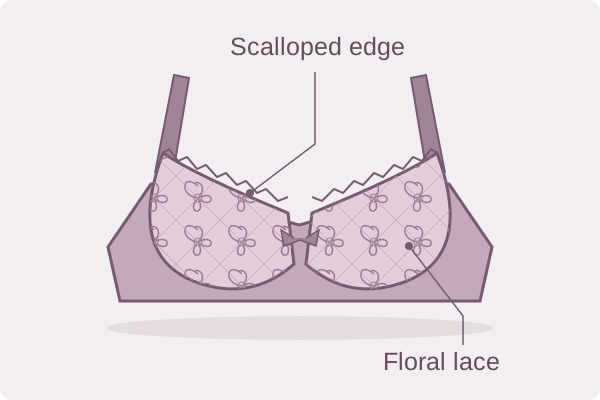
They do not identify a complete fiber composition. Read the main fabric and lining separately. A textured lace surface can appear different under clothing from a smooth finish, even when both styles use a similar fiber.
Explore lace bra detailsMolding describes cup construction. A non-molded cup should not automatically be described as unlined or unpadded, and a thin molded cup can still contain a shaped layer. Check the stated cup construction, padding and lining separately, together with the product photographs. Ask about any layer or material that is not specified.
A cotton cup lining does not make the whole bra cotton. A percentage attached to a main fiber or lining applies to that stated field. If you need a complete composition for an order, ask us to confirm it for the chosen style.
Ask about a product’s compositionCompare the lining, cup thickness, layers and fit against your preferences for warm days. A mesh panel, cotton lining or thin cup tells you about one part of the garment; it does not prove that the whole bra is cooling or moisture-wicking. Ask about unstated materials before choosing.
Read Triumph Singapore’s humid-weather guide Check the materials of a style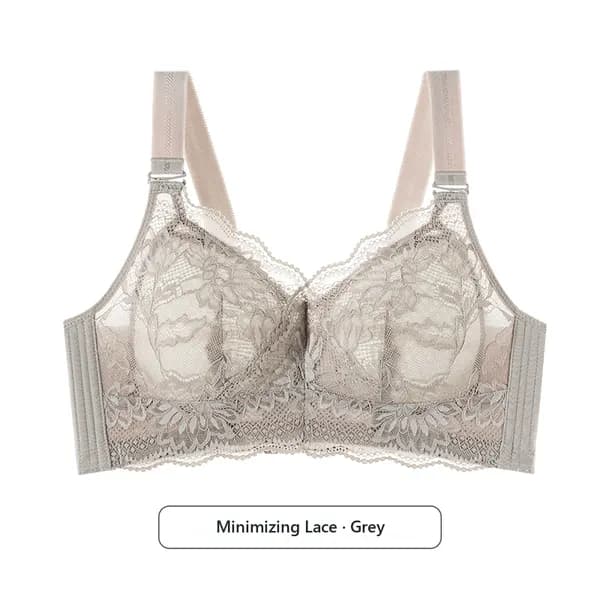
A detail from the LXSC collection
Lace Full-Coverage Bra with Detachable StrapsThis style lists a lace design, thin molded cups, a full-cup shape and detachable shoulder straps. Read each feature separately when comparing it with another bra.
06 / Sets & panties
A coordinated look still needs a separate fit check for each part. A bra label does not determine a panty size.
Read the included-piece list, not only the styled photograph. Compare the top and bottom size information and ask whether separate sizes are available for that particular set. Stockings and other styling accessories are not automatically included.
Explore matching setsMeasure the waist and fullest part of the hips. Compare rise, leg coverage, edges and fabric with the clothes you plan to wear. Choose from the product’s measurements rather than a weight range alone.
Compare pantiesCheck torso length as well as bust, waist and hips. Closure position and adjustability matter in a one-piece garment. If a needed length or measurement is missing, send us the style code before choosing.
Explore bodysuits07 / Lingerie care
Start with the garment’s care label. Lace, elastic, molded cups and trims can need different treatment; general advice should never overrule those instructions.
Separate colors and check hooks, removable pads and trims. Follow the label’s instructions for each part, including the washing method and water temperature.
Use a suitable gentle detergent and avoid twisting or scrubbing delicate fabric. Use a washing machine only if the label allows it; a mesh bag does not change a hand-wash-only instruction.
Where air drying is specified, gently remove excess water and support the garment’s shape. Avoid stretching the straps with the weight of a wet bra or crushing molded cups.
Recheck a band that no longer holds its shape, straps that keep loosening, distorted cups or damaged fastenings. Stop wearing a bra with an exposed wire. Replacement depends on condition, fit, wear and care, rather than one fixed number of months. Give shaped cups room when storing them.
Read Wacoal’s garment-condition checksContinue with our published guides
Follow the garment's care label first. Where suitable, gentle washing, careful rinsing and air drying can help you avoid rough handling of lace, elastic and delicate trims.
08 / Industry notes
Trade-show observations can inspire a wardrobe or a buying brief. They are design directions, not a ranking of what every customer wants. Reviewed November 14, 2026.
A February 12, 2026 report from Salon International de la Lingerie describes lace and knit materials moving into wider wardrobe styling, alongside comfort-focused design. For your own wardrobe, decide how much texture you want to show, then compare the neckline and lining.
Read the organizer’s report Explore lace lingerieTrendalytics’ Spring/Summer 2026 Curve recap highlights lace accents, floral themes, pink shades and contrasts between mesh and trims. These observations can prompt a color or detail comparison; they do not tell you how a particular garment feels or fits.
Read the original Curve recap Compare colors in the lace collectionCompare the actual colors and lining of your selected LXSC style. W927119 offers Dusty Rose and Grey among its options; those choices are not a claim that this product was shown at either event.
09 / For your business
Begin with the customers you serve and the problem each style will solve. A selection can combine everyday smooth bras, lace details and coordinated sets without treating them as the same product.
Record the LXSC codes, colors, sizes and quantities you want, plus the destination and postal code. Use a small order to inspect the listed products before discussing a larger selection. Retail orders contain 2–12 clothing pieces; orders above 12 pieces go through a wholesale quote.
Plan an in-stock wholesale orderCustom production starts at 3,000 pieces. Customers need to provide drawings and detailed customization specifications, including materials, measurements, construction, branding and a proposed color-and-size split. Samples, feasibility, costs and timing are confirmed for the project.
Explore custom production requirementsReview which styles, colors and sizes your customers actually buy or request. Keep that assortment list alongside the previous order reference when asking for a repeat wholesale quote. Reconfirm availability and current specifications before promising the same product for a future launch.
Prepare a retailer or restock enquiryContinue with our published guides
For more than 12 in-stock clothing pieces, send a wholesale enquiry. Selected-style custom production starts from 3,000 pieces and requires customer-provided drawings and detailed specifications. Samples and quantity splits are confirmed in the quotation.
Good to know
Clear answers to help you find your fit, choose a style and plan your order.
Ask us a questionRecord your underbust and bust measurements with the unit, then compare them with the selected product’s size information. Check the complete band-and-cup label or the particular style’s letter-size range. Our illustrated guide shows the measuring positions and fit checks.
Open the measuring illustrations →A smooth surface, a lower center and removable straps solve different dressing needs. Compare the neckline, back, straps and cup finish with the clothes you plan to wear. A bandeau-shaped neckline alone does not mean that a bra can be worn strapless.
Compare outfit choices on this page →No. A trend describes an appearance or a direction in design. Your fit still depends on the individual garment’s measurements, construction and size options. Use trend notes for inspiration, then check the product details.
Understand the product details →Compare the individual style’s actual band and cup range, cup coverage, straps and band construction. Wireless means there is no underwire; it does not define one level of support or promise a fit for every bust. Check your measurements against the selected product rather than choosing by the wireless label alone.
Check larger size options →Only if the particular garment’s care label permits it. Follow the stated method and settings; lace, elastic, lining and trims can need different treatment. A laundry bag helps protect suitable garments but does not make a hand-wash-only item machine washable.
Review the care steps on this page →Consider sweat, how long it was worn and the garment’s care label rather than following one schedule for every bra. Follow the approved washing method when the garment needs cleaning, and let it dry completely before wearing or storing it. A wire-free or lace label does not determine how it should be washed.
Follow the care and drying steps →You can buy 2–12 clothing pieces from the retail collection. For more than 12 listed in-stock pieces, request a wholesale quote. Custom production starts at 3,000 pieces and requires drawings and detailed customization specifications. An existing sample does not approve a different custom design.
Explore custom and wholesale options →